
I started fishing in the late 60s and climate change was not a topic on the lips of the public nor the general media. Today it is recognised as one of the greatest threats to our natural world and mankind itself. As I write this, Covid-19 is wreaking havoc around the world killing thousands and crippling economies. I am among millions of others who are obeying their government’s guidance on social distancing and “stay at home” policy to help stop the Covid-19 spread. Hopefully the worlds leaders will realise that mankind must take action to negate our impact on the natural world stopping the wild animal trade and protect our beautiful natural world.
In my fifty something years I have been fishing in West Cumbria things have changed immensely. The heavy industry that both polluted the air and sea of our coastline has gone. Workington steelworks which belched smoke into the atmosphere, and the “gas waters” as they were called, killed everything that swam into them off the beach at Mossbay. The Marchon chemical plant at Whitehaven discharging God only knows what into the sea. On calm mornings there would be huge banks of foam laying on the water surface in the area south of the West Pier. The Ectona and Thames Board Mills pipes, to name others, discharging their effluent onto the beaches at Siddick. The amount of raw sewage being discharged onto the beaches was huge and the “done thing” in those days. Pipes all along the coast line pumping untreated sewage into the water, and the sad thing was, in summer we children all swam in those waters with turds bobbing along beside us!
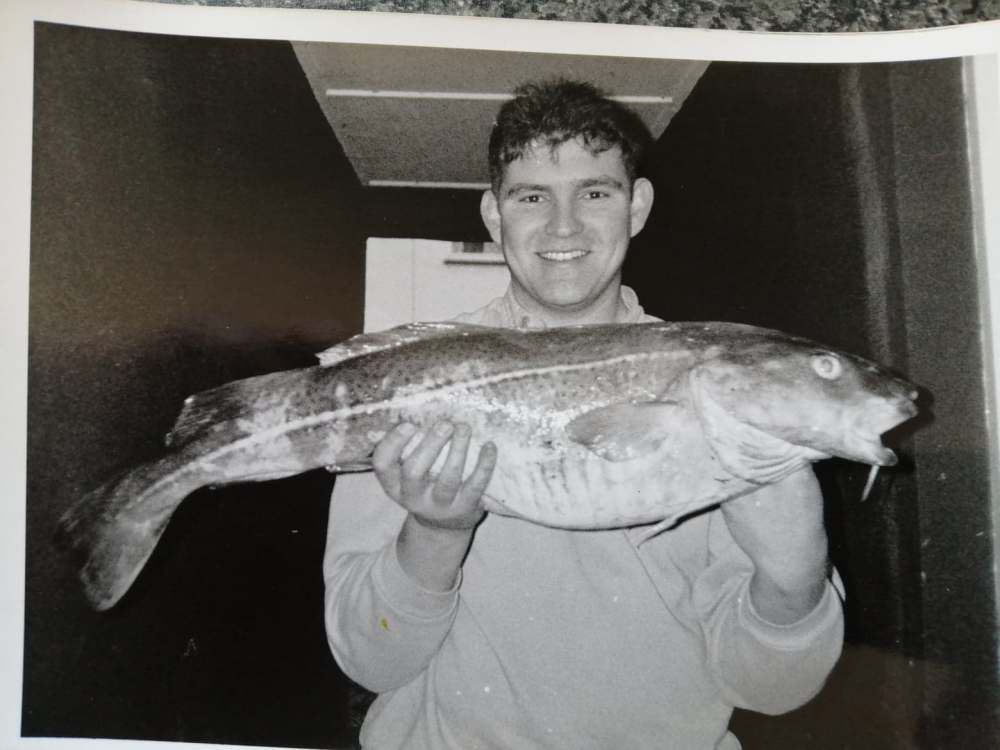
The now cleaner sea waters along with commercial over fishing of some species, plus climate change have resulted in different fish species now being caught along our coastline. As a young angler fishing from Harrington pier and beaches the main quarry caught in summer were flounders, plaice, eels, mackerel and small codling. On calm summer days I remember huge shoals of mackerel chasing sandeels into the gut, herding them into the confined area between the harbour entrance and the pier pump house. The water boiling as they smashed into the shoals of these bait fish. Those days have long gone with overfishing of both the sandeel and mackerel. In winter there was an abundance of pouting, often you didn’t stand a chance of catching a prized cod as the hoards of these piranha like voracious feeders were on your bait as soon as it hit the sea bed. They are very rarely caught now and in the past 15 years I have only heard of the odd one caught off Whitehaven West Pier. Coalfish were a very common catch in the winter from both piers and beaches, they disappeared for many years, but they seem to be making a comeback with a few being caught on a regular basis over the past 4 or 5 years.
West Cumbria was famous when I was a young angler for its cod, good numbers of fish being caught off the rough ground beaches. Drigg, Netherton, St Bees, Parton, Lowca, Harrington, Salterbeck, Black Bank, Siddick and Flimby to name a few. Along with the huge fish also being caught from the piers at Whitehaven, twenty and thirty pound fish were common each winter.
The commercial fishing in the 80s and 90s decimated the cod stocks and in some of the later years you were lucky if you could catch a cod! They just did not show on their usual autumn and winter migration to the spawning grounds in the Solway Firth. A lot of anglers would also fish Balcary on the south west coast of Scotland on the other side of the Solway Firth. This was the best mark in the country for BIG cod.
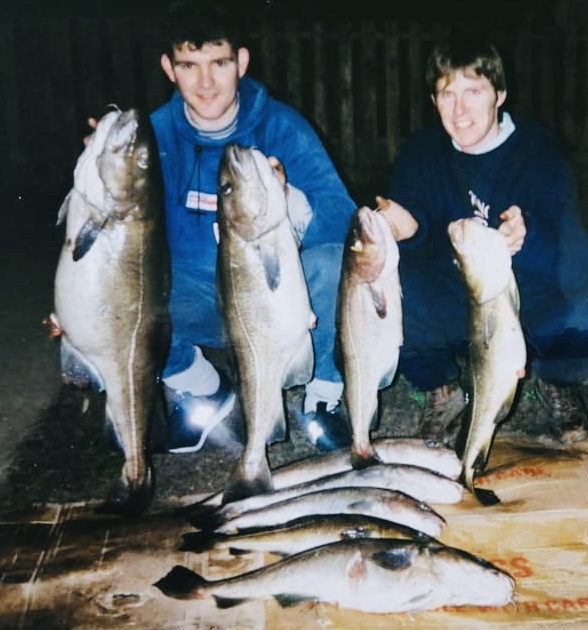
Best Fish 28lbs and two around 19lbs
They spawned in the deep waters close to the coastline and if you talk to some of the older anglers they will regale you with their stories of sessions catching several double figured fish into the 20 pounds bracket . These fish also disappeared around the same time that the commercial fishing boats were joined by the smaller inshore boats, using the new monofilament trammel gill nets. These nets became highly popular, due to the huge amounts of fish they would catch. A number of years ago I once had a conversation with a fishing boat owner from Workington harbour, who claimed to be the first local fisherman to use the new gill nets. He first saw them advertised in Canada and ordered one. He had no idea how it fished, but after several times trying he sussed that it was cast with the tide run, anchored off at both ends with a weighted bottom line and floats on the top line lifting it in the water. The first time he tried it close inshore off Mossbay Steelworks he was amazed the number of fish it caught 30-40 stone of cod in just a matter of hours! He said that he tried to keep the net a secret, but the other boat owners were both amazed and jealous in how he was catching these huge hauls of fish! Then one day he said he was not happy when as he was hauling one of his nets another boat owner decided to come alongside him to see how he was catching so many fish and the secret was out! He saw the net in action and this was the start of everyone using these super efficient fish killers. He said he then went on to made some money by ordering the nets and selling them on to other boat owners but the local net makers soon were knitting their own and selling them. Whether or not his story is true, what is true is that these nets decimated the inshore fish stocks and they have never recovered.
From the larger boats to the 14 foot dinghy owner everyone soon had the coastline in West Cumbria layered with trammel nets from south Cumbria to Maryport in the north and beyond. It was depressing for a recreational angler to be able to see as far as you could the marker buoys of these nets all along the coastline.
 My Fishing Passion
Another good read
LikeLiked by 1 person
Thanks Alan, glad you enjoyed the article. Hopefully we will be able to get out soon, take care. Tight lines Mark
LikeLike
Looking good Mark keep it going
LikeLike
Thanks Badger hope you find the topics interesting.
LikeLike